
Did Hiroshima and Soviet Entry Into the War Together End World War II
Japan did not surrender in 1945 because of one event in isolation. The end came from a pileup of disasters that made the war impossible to continue. The atomic bombings shocked Japan’s leaders, the Soviet Union’s attack destroyed Japan’s last major strategic hope, the Allied blockade strangled the economy, and years of conventional bombing had already burned down much of the country’s urban capacity.
So did the atom bomb end World War II? Yes, it played a major role.
Did Stalin’s army defeat Japan by attacking from the west and overrunning Manchuria? Yes, that also mattered deeply.
Was it the combined Allied effort, including the United States, Britain, China, and the Soviet Union, that forced Japan’s surrender? That is the best short answer.
The harder answer is more interesting. Japan’s leaders were not all thinking the same way. Some wanted to end the war before total national destruction. Others wanted to fight one last decisive battle to gain better surrender terms. The atomic bombs changed the cost of delay. The Soviet entry changed the strategic map. Together, they crushed the two main arguments for continuing the war.
Japan was already losing before Hiroshima
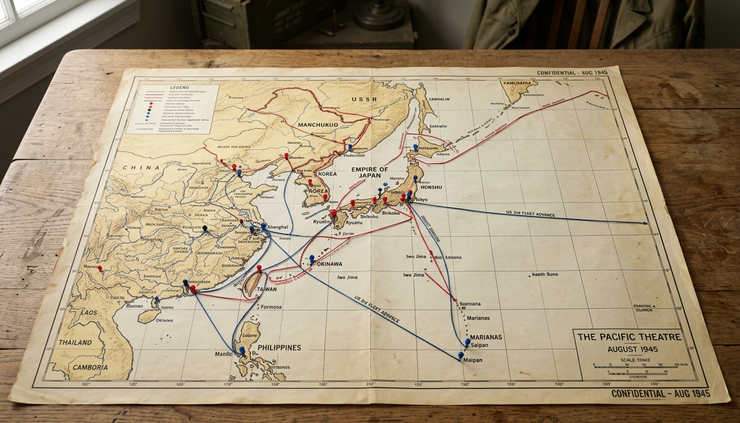
By the summer of 1945, Japan’s military position was desperate. The Imperial Japanese Navy had been largely destroyed as an effective force. Its merchant shipping had been devastated by American submarines and mines. Fuel was running out. Food shortages were growing. Japanese cities had suffered massive damage from conventional bombing, including the firebombing of Tokyo in March 1945.
The United States and its allies had captured island bases close enough to strike the Japanese home islands. Okinawa fell in June 1945 after one of the bloodiest battles of the Pacific War. That battle mattered because it showed what an invasion of the main islands might look like: fierce resistance, heavy civilian suffering, and very high casualties on both sides.
Japan’s leaders knew they were losing. The key question was not whether Japan could win the war outright. By mid-1945, that was no longer realistic. The question was whether Japan could make surrender more favorable by forcing the Allies to pay a terrible price.
Many in Japan’s high command hoped for a negotiated peace, not unconditional surrender. They wanted to preserve the imperial system, avoid occupation if possible, and protect Japan from total disarmament or war crimes trials. Some military leaders believed that if Japan inflicted enough casualties during an American invasion, the United States might soften its terms.
That hope rested on several assumptions:
The United States might not have the will to accept huge losses in an invasion.
Japan might still be able to defend the home islands fiercely.
The Soviet Union might be used as a mediator between Japan and the Western Allies.
The empire could still hold enough territory to bargain from a stronger position.
By August 1945, each of those assumptions was under severe strain. Then, within three days, two shocks arrived.
On August 6, the United States dropped an atomic bomb on Hiroshima.
On August 8, the Soviet Union declared war on Japan. In the early hours of August 9, Soviet forces attacked Japanese-held Manchuria.
Later on August 9, the United States dropped a second atomic bomb on Nagasaki.
Japan’s leadership faced not one crisis, but several at once.
The atomic bombs made delay terrifying
The Hiroshima bombing showed Japan’s leaders that one aircraft could destroy much of a city with one bomb. That was not just another raid. Japan had already endured catastrophic conventional bombing, but atomic weapons changed the pace and meaning of destruction.
A normal bombing campaign required many planes, many bombs, and repeated attacks. The atomic bomb suggested something different: the United States might be able to destroy cities one by one with far fewer warning signs and far less effort.
The human cost was immense. Hiroshima suffered massive death and destruction on August 6, 1945. Nagasaki suffered the same fate on August 9. Many people died instantly. Many more died later from burns, injuries, and radiation sickness. By the end of 1945, deaths related to the bombings are often estimated at roughly 140,000 in Hiroshima and about 70,000 in Nagasaki, though exact numbers vary by source and method.
For Japan’s top leaders, the bombs created a political and strategic crisis. If the United States had more atomic bombs, how long could Japan delay? What would be left to defend? Could the government keep order if more cities vanished?
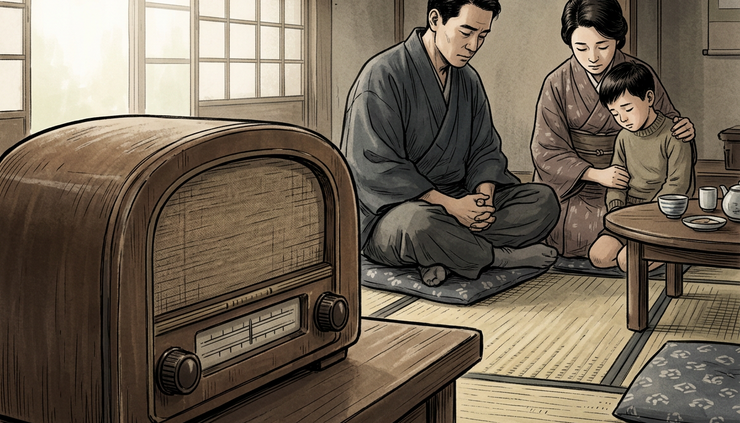
The bombs also gave Emperor Hirohito a powerful reason to intervene. In his surrender broadcast on August 15, he referred to the enemy’s use of “a new and most cruel bomb.” That phrase has often been taken as evidence that the atomic bombings were the decisive factor.
They were certainly one of the decisive factors. The bombs did several things at once:
They proved that Japan’s cities could be destroyed faster than before.
They weakened the military argument for fighting on.
They gave surrender advocates a clear reason to push for acceptance of Allied terms.
They helped the emperor justify surrender to the Japanese public.
But the atomic bombs alone do not explain everything. After Hiroshima, Japan did not immediately surrender. The Supreme War Council still remained divided. Some leaders wanted more information. Some doubted whether the United States had only one such bomb or many. Some still hoped to secure better terms.
That is why the Soviet attack matters so much.
Soviet entry destroyed Japan’s last diplomatic and military hope
The Soviet Union had not been at war with Japan during most of the Pacific War. Japan and the Soviet Union had signed a neutrality pact in 1941. Even though Germany and Japan were allies, and the Soviet Union was fighting Germany, Moscow and Tokyo avoided war with each other for most of the conflict.
By 1945, Japan hoped the Soviet Union might mediate between Japan and the United States. This was always a weak hope, but it mattered because some Japanese leaders believed Moscow could help Japan avoid unconditional surrender.
That hope collapsed on August 8, 1945, when the Soviet Union declared war.
The timing was not random. At the Yalta Conference earlier in 1945, Stalin had agreed to enter the war against Japan after Germany’s defeat. Germany surrendered in May. About three months later, the Soviet Union struck.
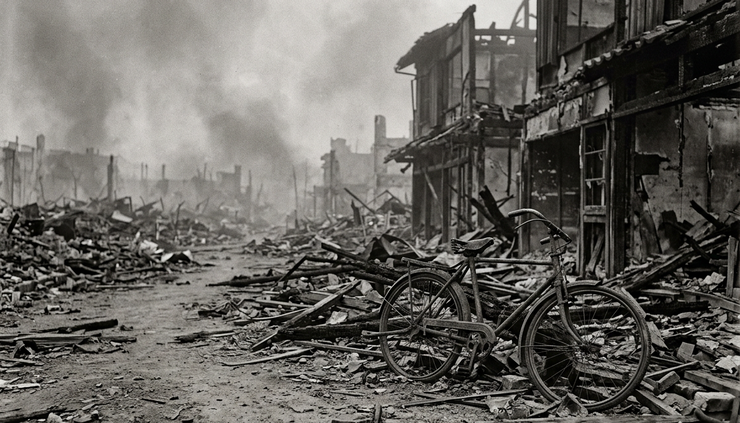
The Soviet offensive, often called Operation August Storm, was huge and fast. Soviet forces attacked Japanese-held Manchuria from multiple directions. They crossed difficult terrain, including deserts, mountains, and fortified zones. The Kwantung Army, once considered one of Japan’s elite forces, was no longer at peak strength. Many of its best units had been moved elsewhere, and it lacked enough armor, air support, and supplies to stop the Soviet advance.
The Soviet campaign shattered Japanese control in Manchuria. Soviet forces also moved into northern Korea, southern Sakhalin, and the Kuril Islands. This mattered for more than battlefield reasons.
It meant Japan now faced a two-front strategic disaster:
From the east and south
From the west and north
The United States and its allies controlled the sea and air approaches to Japan. They could bomb, blockade, and prepare invasion.
The Soviet Union could destroy Japanese forces on the Asian mainland and potentially threaten Japan’s northern territories.
The Soviet entry also changed the political calculation inside Tokyo. Japan could no longer hope Moscow would negotiate a better peace. That diplomatic door slammed shut.
It also raised a new fear: Soviet occupation.
Japanese leaders knew what had happened in Eastern Europe as the Red Army advanced against Nazi Germany. If the war continued, Japan risked being divided between American and Soviet occupation zones, much like Germany. For leaders who wanted to preserve the imperial institution, this was a nightmare.
The Soviet attack made delay look more dangerous. Waiting no longer meant only absorbing American bombing and preparing for invasion. It could mean Soviet forces gaining more territory and more influence over Japan’s postwar fate.
Some historians argue that Soviet entry may have shocked Japan’s leadership even more than Hiroshima did. The reason is simple. Hiroshima was a terrible new weapon, but it did not destroy Japan’s strategy by itself in a single stroke. Soviet entry did. It eliminated the hope of mediation and opened a new battlefield Japan could not manage.
That does not mean the Soviet Union alone ended the war. It means the Soviet attack struck exactly where Japan’s strategy was weakest.
The surrender came from pressure on several fronts
The cleanest answer is that both the atomic bombs and Soviet entry helped end World War II, but they worked in different ways.
The bombs created a new level of immediate destruction. The Soviet attack destroyed Japan’s last diplomatic option and proved that the empire could not hold its mainland positions. The blockade and conventional bombing had already weakened Japan to the point where these shocks could break the deadlock.
Think of Japan’s surrender as a locked door with several bolts. The atomic bombs broke one bolt. The Soviet invasion broke another. The blockade, naval defeat, and air campaign had already damaged the frame.
The blockade made survival harder
By 1945, Japan’s economy was in severe trouble. The country depended on imported raw materials and fuel. American submarines had sunk large amounts of Japanese shipping, and aerial mining made sea movement even more dangerous. The loss of shipping meant Japan struggled to move food, coal, oil, and military supplies.
A nation can keep fighting without winning. It cannot fight forever without fuel, food, and transport.
The blockade did not produce a dramatic single moment like Hiroshima or the Soviet invasion of Manchuria. Still, it created the background conditions that made surrender more likely. By August, Japan had fewer ways to recover from each new blow.
Conventional bombing had already devastated cities
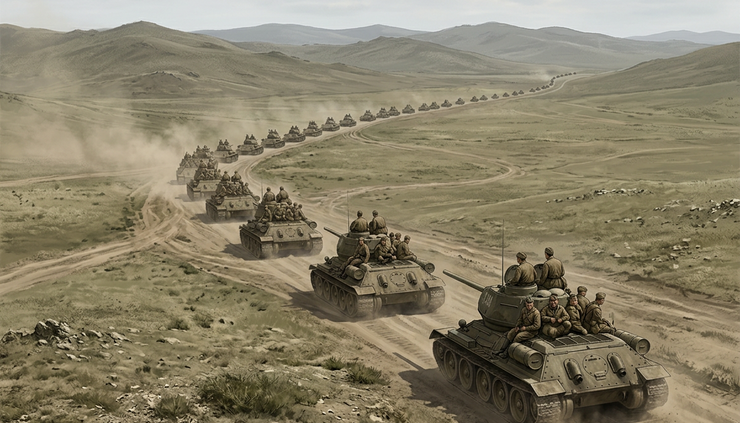
Before the atomic bombs, American B-29 raids had burned many Japanese cities. Tokyo’s firebombing in March 1945 killed a huge number of civilians and destroyed large areas of the city. Other urban centers also suffered.
That raises a hard question: if Japan had already endured city destruction, why did the atomic bombs matter?
They mattered because they suggested that destruction could now happen with far fewer planes and with a new psychological effect. One bomb, one city. That was different from even the largest conventional raids.
Still, the earlier bombing campaign matters because it shows Japan was not suddenly pushed from stability to surrender in August. The country had been under crushing pressure for months.
Allied demands shaped the final decision
The Allies issued the Potsdam Declaration on July 26, 1945. It demanded Japan’s surrender and warned of “prompt and utter destruction” if Japan refused. Japan did not accept it at first.
One of the most sensitive issues was the emperor. Many Japanese leaders feared that unconditional surrender could mean the end of the imperial system. The final Allied response allowed some ambiguity. It said the emperor and the Japanese government would be subject to the authority of the Supreme Commander for the Allied Powers. In practice, Hirohito remained on the throne after surrender, though under occupation authority and with a transformed role.
This mattered because the emperor’s intervention broke the deadlock. Japan’s Supreme War Council was split between surrender and continued resistance. Hirohito sided with accepting surrender, which gave peace advocates the authority they needed.
Even then, some military officers tried to prevent surrender. A coup attempt occurred before the emperor’s broadcast. It failed. On August 15, 1945, the emperor’s recorded message announced Japan’s acceptance of surrender terms to the public. The formal surrender took place on September 2, 1945, aboard the USS Missouri in Tokyo Bay.
China’s long war also mattered
The question often gets framed as America versus the Soviet Union: did the bombs end the war, or did the Red Army?
That framing leaves out China and the wider Allied war.
Japan had been fighting in China since 1937, and parts of the conflict began even earlier with Japan’s seizure of Manchuria in 1931. Chinese resistance tied down large Japanese forces for years. The war in China drained Japanese manpower, supplies, and political attention. The United States, Britain, Australia, India, the Netherlands, and many others also contributed across the Pacific and Asian theaters.
By 1945, Japan’s defeat came from a broad Allied effort. The United States delivered the atomic bombs and led the island-hopping campaign. China endured and resisted a long land war. Britain and Commonwealth forces fought in Burma and across the region. The Soviet Union’s late entry destroyed Japanese power in Manchuria. Each part mattered in a different way.
Why historians still disagree about what was most decisive
The debate continues because the evidence points in more than one direction.
Some historians place the atomic bombs at the center. They point to the emperor’s surrender broadcast, the shock inside Tokyo, and the fact that Japan surrendered only after Hiroshima and Nagasaki. They argue that the bombs avoided a planned invasion that could have killed vast numbers of Japanese civilians and Allied soldiers.
Other historians emphasize Soviet entry. They point out that Japan did not surrender immediately after Hiroshima, but the leadership crisis became acute after the Soviet declaration of war and the Manchurian offensive. They argue that losing Moscow as a possible mediator and facing Soviet occupation changed Japan’s decision more than the bombs did.
A third view sees the two as inseparable. This may be the strongest interpretation. Hiroshima, Soviet entry, and Nagasaki happened within a narrow window. Japanese leaders were trying to process several disasters at once. Isolating one cause can make history too neat.
Real decisions rarely work that way. Governments act under pressure, fear, confusion, pride, and limited information. Japan’s leaders did not sit in a classroom and rank causes on a chalkboard. They faced the collapse of their options.
The strongest evidence for the “both” answer is the timing. Hiroshima shook Japan. Soviet entry transformed the war. Nagasaki reinforced the atomic threat. The emperor then intervened to end a deadlock that might otherwise have continued.
That sequence suggests that no single cause should be treated as the only cause.
The invasion question complicates the debate
The United States had planned for a possible invasion of Japan. The first major landing, Operation Olympic, was planned for Kyushu. A later operation would target the Tokyo area. American leaders expected heavy casualties, though estimates varied widely.
Japanese planners also expected a brutal defense. They prepared aircraft, small boats, troops, and civilians for resistance. The experience of Iwo Jima and Okinawa suggested that an invasion would be devastating.
Supporters of the bombing decision often argue that the atomic bombs forced surrender before such an invasion. Critics reply that Japan might have surrendered soon because of Soviet entry, blockade, and possible changes to surrender terms.
This question cannot be answered with certainty because the invasion never happened. What can be said is that American leaders in 1945 did not know exactly when Japan would surrender. They knew Japan had not accepted the Potsdam Declaration. They knew the fighting on Okinawa had been horrific. They knew the Japanese military still had large forces. They also wanted to end the war before more Allied prisoners, soldiers, and civilians died.
That context helps explain the decision, even if people still debate its morality and necessity.
The emperor’s role was central
Japan’s surrender depended on more than military facts. It also depended on who had the authority to accept defeat.
The emperor had usually stayed above day-to-day political conflict. In August 1945, he became decisive. When the leadership split, his support for surrender broke the tie.
The atomic bombs gave him a reason to say the war threatened the survival of the Japanese people. The Soviet attack gave him another reason: the strategic situation had become hopeless, and waiting risked greater catastrophe.
His intervention did not mean all leaders agreed. It meant the surrender faction finally had enough authority to overcome resistance.
The best answer is that the war ended because all the pressures converged
The atomic bombs did not end World War II by themselves in a simple, one-cause way. Soviet entry did not end it by itself either. Japan surrendered because several forms of pressure converged at once and made continued war look hopeless.
The United States forced the crisis from the air and sea. Its submarine campaign, bombing campaign, island advances, and atomic bombs put Japan under unbearable pressure.
The Soviet Union destroyed Japan’s last hope of using Moscow as a mediator. Its attack in Manchuria also showed that Japan could not protect its empire on the Asian mainland.
China and the wider Allied coalition had already worn Japan down. Years of resistance and multi-front warfare left Japan with fewer resources and fewer choices.
Japan’s internal politics made the timing complex. Some leaders wanted surrender sooner. Others wanted to fight on. The emperor’s intervention became the key step that turned military defeat into formal surrender.
So, did Hiroshima end the war? It helped end it.
Did Stalin’s army defeat Japan? It defeated Japan’s major army in Manchuria and helped force a final decision.
Was it all of the above? Yes. The end of World War II in Asia came from the combined weight of atomic shock, Soviet attack, Allied military pressure, blockade, bombing, and Japan’s collapsing ability to bargain.
History is often taught through single turning points because they are easy to remember. August 1945 is better understood as a chain reaction. Hiroshima broke one part of Japan’s will to continue. Soviet entry broke another. Nagasaki and the wider Allied squeeze left almost no room for delay. The surrender came when Japan’s leaders finally accepted what the battlefield had been saying for months: the war was lost, and continuing it would only bring greater ruin.

Comments