
X-Men Animated Series Night of the Sentinels S1 E1 Analysis with Key Site Links
A children’s cartoon opened with state surveillance, armed robots, family betrayal, and a teenage girl hunted for being born different. That is still a bold starting point.
“Night of the Sentinels,” the first episode of X-Men: The Animated Series, does not ease viewers into its world. It throws Jubilee into danger, introduces the X-Men as both rescuers and targets, and frames mutant life as a public crisis before most of the team has even been named on screen.
The result is one of the strongest superhero TV premieres of the 1990s. It is loud, colorful, sometimes stiff in animation, and packed with exposition. It also knows exactly what the X-Men are about: fear, prejudice, found family, and the hard choice to protect a world that may never fully trust you.

“Night of the Sentinels” starts with Jubilee for a reason
The premiere makes a smart choice by centering Jubilee before it centers the X-Men. Instead of opening with Professor Xavier explaining mutant history, the episode follows a teenager whose powers interrupt her normal life.
Jubilee is not introduced as a superhero. She is scared, sarcastic, and overwhelmed. Her mutant ability appears in public, and the world reacts with fear before she understands what she has become. That point of view gives the episode its emotional hook.
For new viewers, Jubilee is the way in. She asks the questions a first-time audience would ask:
Who are the X-Men?
Why are mutants feared?
Why are government agents tracking them?
Are these costumed strangers safe to trust?
That structure gives the premiere a strong engine. The X-Men do not need long origin speeches because Jubilee’s situation explains the stakes. One teenager becomes the proof that mutant registration and Sentinel enforcement are not abstract policies. They have immediate consequences.
The mall sequence is especially important. A mall was one of the most familiar public spaces for young American viewers in the early 1990s. By placing danger there, the episode makes the mutant conflict feel close to everyday life. Jubilee is not hiding in a secret lab or alien world. She is in a place made for teenagers, consumer culture, noise, and ordinary freedom.
Then the Sentinels arrive.
That contrast is the core of the episode. Normal life can collapse fast when fear gets organized.
The Sentinels make prejudice physical
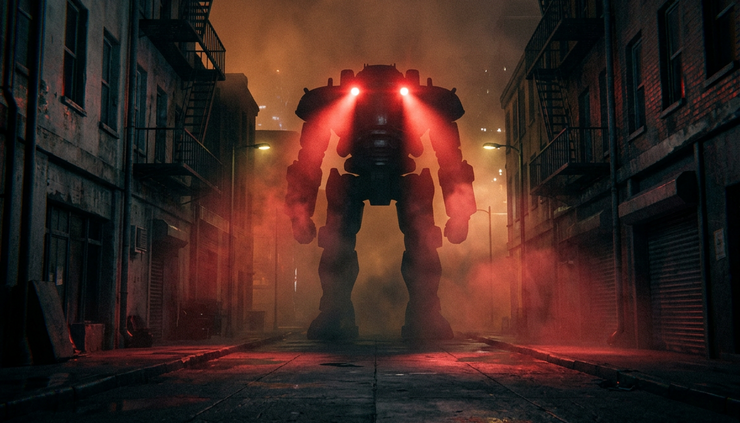
The Sentinels are perfect first villains for the series because they turn social fear into metal. They do not hate mutants in the emotional way a human villain might. They classify, target, and capture. That makes them colder and more frightening.
A mutant-hunting robot is a simple idea, but “Night of the Sentinels” uses it well. The Sentinels give shape to a system that treats people as threats before they do anything wrong. The episode’s version of mutant registration does not feel like background world-building. It feels like a machine being built around vulnerable people.
Henry Peter Gyrich and Bolivar Trask matter for the same reason. They are not aliens, demons, or cosmic tyrants. They are humans with authority, resources, and a theory of public safety that strips mutants of basic dignity. Trask builds the machines. Gyrich pushes the security logic. Together, they let the show say something sharp in a format built for young viewers.
The episode also understands scale. The Sentinels are large enough to create spectacle, but their real power is not only physical. They represent files, lists, scans, raids, and the idea that a person’s identity can make them a target.
That is why the X-Men’s mission is not just a fight. They try to protect mutant records and prevent more people from being hunted. The action has a direct moral purpose.
The premiere introduces the team through function, not biography
One reason the episode moves fast is that it does not stop to give every X-Man a full backstory. It introduces the team by showing what each member brings to the field.
Cyclops is the field leader, controlled and mission-focused. Wolverine is blunt and volatile, already pushing against Cyclops’ authority. Storm speaks with regal certainty and carries herself like someone who knows the weight of her power. Rogue is strong, direct, and emotionally guarded. Gambit brings charm and danger. Beast is thoughtful and humane. Jean Grey and Professor Xavier help define the team’s psychic and moral center. Morph adds humor, which matters because the story itself is heavy.
Some of the dialogue is broad, and a few character traits arrive with no subtlety. Wolverine’s attitude, Gambit’s flirting, and Storm’s grand declarations can feel oversized by modern TV standards. Yet that broadness helps the premiere do a lot in a short runtime. The characters need to be readable right away.
The show also benefits from casting the X-Men as a team that already exists. This is not a slow assembly story. The mansion, the jet, the Danger Room feeling, and the moral code are already in place. Jubilee enters a world with history, rules, and pain.
That choice creates momentum. It also gives the series room to reveal character details later. The premiere says, in effect, “Here is the family. You will learn why they need each other as you go.”
The episode’s strongest theme is found family under pressure
The X-Men have always worked best when the superhero fantasy and the outsider metaphor support each other. “Night of the Sentinels” understands this from the start.
Jubilee’s foster parents are frightened enough to contact authorities, or at least cooperate with a system that puts her in danger. The episode does not need to turn them into cartoon monsters. Their fear is enough. That makes the betrayal hurt more because it comes from a recognizable place: adults choosing order over understanding.
Xavier’s school offers the opposite model. It is not only a training ground. It is shelter. The X-Men are not safe because they have powers. They are safer together because someone sees them as people first.
That idea gives the episode its emotional shape:
The outside world sees mutants as a category.
Gyrich wants control.
The Sentinels hunt by identity.
Xavier’s school sees them as individuals.
Xavier wants restraint and dignity.
The X-Men protect by choice.
The contrast is clear without being simplistic. The show does not pretend that mutant powers are harmless. Jubilee’s powers are dangerous because she cannot control them yet. The X-Men themselves can cause serious damage. The question is what society does with that fear.
Does it teach, protect, and make room? Or does it build weapons?
That question gives the premiere more weight than a standard villain-of-the-week story.
The craft shows its age, but the storytelling still works
The first episode has the strengths and limits of early 1990s TV animation. Some movement is stiff. Characters sometimes hold poses while dialogue carries the scene. The editing can feel rushed because the episode has to introduce Jubilee, the team, the villains, the Sentinels, the mansion, and the larger conflict in less than half an hour.
Even so, the premiere has a strong visual identity. The character designs are bold and instantly recognizable. The color palette is rich. The theme music, which became one of the most famous superhero TV themes ever, gives the show urgency before the story even begins.
The voice performances also do a lot of heavy lifting. The cast gives the characters distinct rhythms. Wolverine growls, Storm proclaims, Beast reflects, Gambit slides through lines with a performer’s ease, and Jubilee sounds like a real teenager caught between bravado and panic.
The writing can be direct, but direct does not mean shallow. The episode has to be clear because it is building a world quickly. Its best scenes work because the emotions are easy to grasp and the stakes are not vague.
A young person is being hunted. A hidden community steps forward. A government-backed force threatens to turn fear into policy.
That is a clean dramatic setup.
Key site links for watching, researching, and reading more
For anyone revisiting the episode or checking background details, these are useful starting points. Availability can change by region and subscription, but the official and reference links below are reliable places to begin.
Site | Why it matters |
A good official hub for X-Men characters, comics, and related Marvel material. | |
The main streaming home for many Marvel animated titles in the US, depending on current catalog availability. | |
Useful for reading X-Men comics that shaped the characters and themes behind the animated series. | |
Helpful for cast listings, episode references, and production details. | |
A broad reference for the show’s history, seasons, and general context. | |
The best starting point for current official Marvel news and character pages. |
For deeper context, the comics most tied to the show’s DNA include the Chris Claremont era of Uncanny X-Men, the 1991 X-Men launch associated with Jim Lee’s designs, and the long-running Sentinel stories that made mutant persecution a central part of X-Men mythology.
The series does not adapt one single comic issue in “Night of the Sentinels.” Instead, it blends familiar ideas into a TV-friendly opening. Jubilee’s point of view, the government threat, the mansion as refuge, and the team lineup all help translate decades of comics into one accessible premiere.
This is why the episode remains such a useful entry point. It does not require comic knowledge, but it rewards it.
Why the cliffhanger matters
“Night of the Sentinels” is only the first half of a two-part opener, and that matters. The episode is built to leave the audience unsettled. It does not fully resolve Jubilee’s place with the team, the Sentinel threat, or the cost of fighting back.
That structure tells viewers what kind of series this will be. The X-Men may win battles, but their problems will not vanish in 22 minutes. Prejudice, trauma, trust, and public fear will carry across episodes.
The cliffhanger format also raises the sense of danger. Saturday morning cartoons often reset quickly. This one signals that consequences can last. Characters can be captured. Missions can fail. The team can be shaken.
That serial quality became one of the show’s defining strengths. It helped make X-Men: The Animated Series feel larger than many of its peers. Stories moved forward. Relationships changed. Old wounds returned.
The premiere plants those expectations early. The X-Men are heroic, but they are not untouchable.
The lasting value of “Night of the Sentinels”
The premiere works because it treats its young audience seriously. It has action, jokes, costumes, and giant robots, but it also asks clear moral questions. Who gets protected by public safety? Who gets watched? What happens when fear becomes law? What does family mean when the world rejects you?
Those questions are the reason the episode still holds up.
Not every line lands smoothly. Not every animation choice has aged well. Yet the core is strong. Jubilee’s fear feels real. The Sentinels feel threatening. The X-Men feel like a team with history. The world feels hostile enough to justify Xavier’s dream, but not so hopeless that the dream seems foolish.
That balance is the heart of the franchise.
X-Men: The Animated Series began by showing a teenager hunted in public and rescued by people who had already lived through that fear. “Night of the Sentinels” remains memorable because it does what a great pilot should do: it tells one urgent story while opening the door to a much bigger one.


Comments